
Cable Percussion Runs

Updated: Sep 29
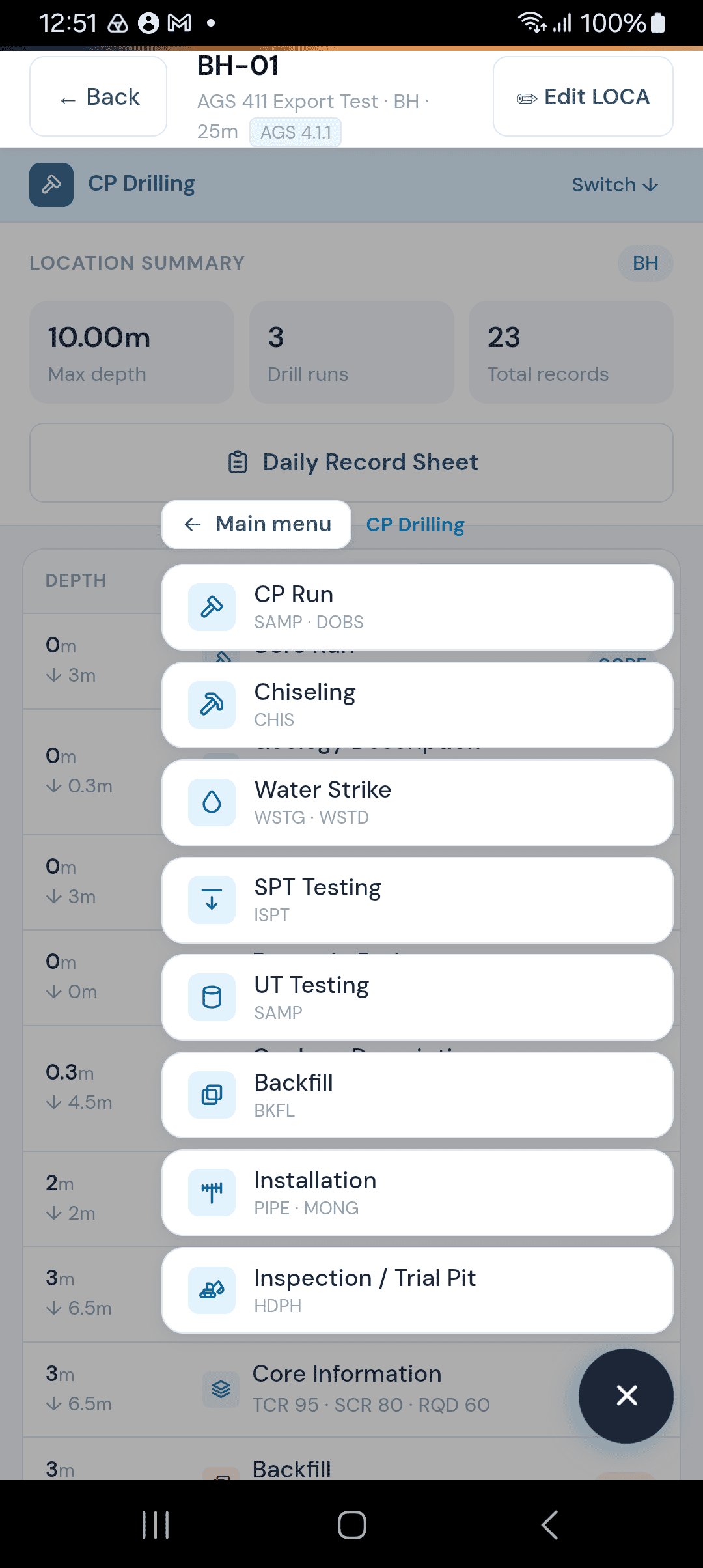
Cable Percussion (CP) is one of the most common drilling methods in UK ground investigation. GneissFox records each CP run as a combined depth observation and bulk sample.
What is a CP Run?
Each CP run records the advance of the borehole over a depth interval using cable percussion tools (shell, chisel, or auger). A bulk disturbed (B) sample is automatically created for each run, since the material brought to the surface represents the ground at that depth.
Each run records its depths and timing, a B (bulk) sample and, optionally, casing.
The CP Run Form
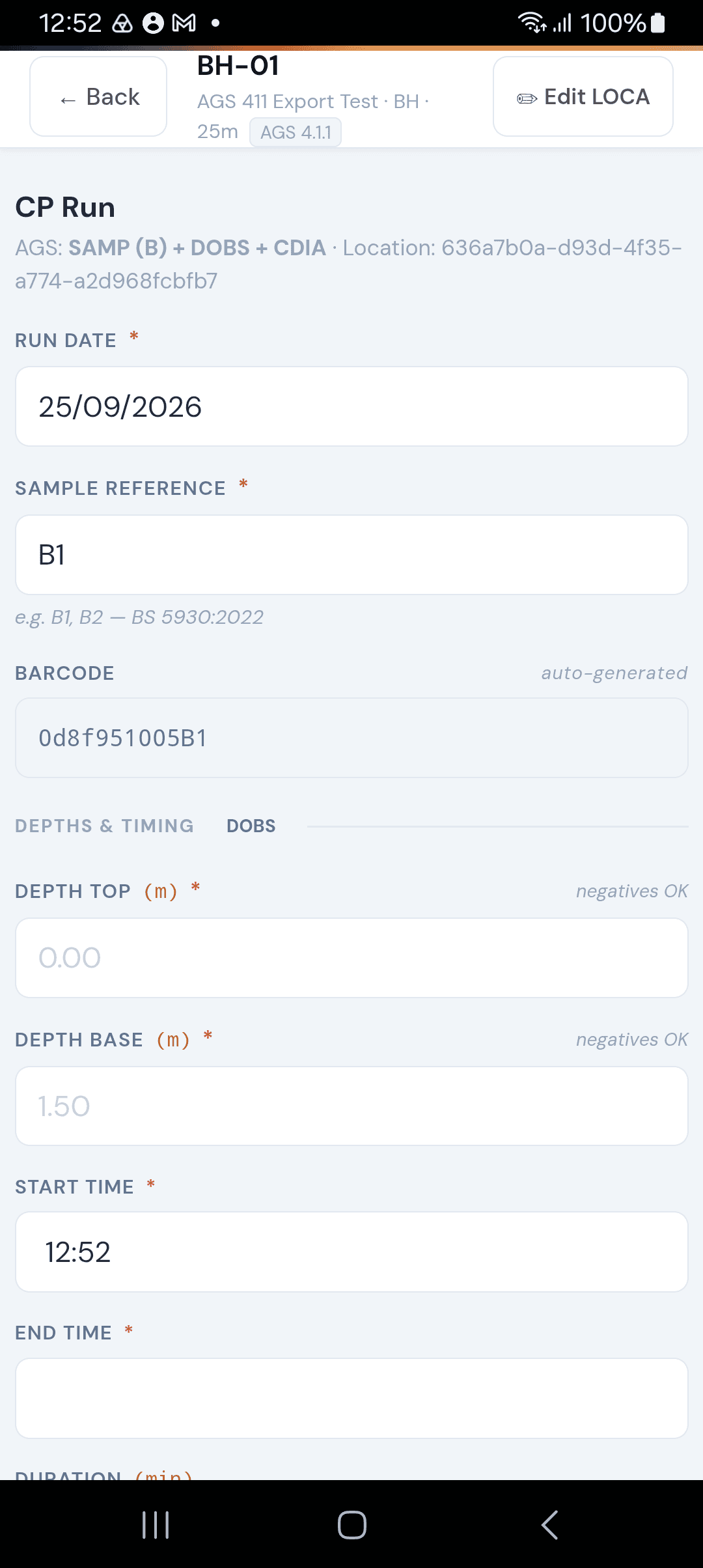
Run Date
The date this run took place. Defaults to today. Required.
Sample Ref
Auto-filled as B1, B2, B3, etc. (sequential bulk sample numbering). You can edit this if your project uses a different convention. Required.
Barcode
Auto-generated unique barcode for the bulk sample. Read-only.
Depths & Timing
Depth Top and Depth Base
The depth interval drilled during this run, in metres. Both are required.
Start Time and End Time
When drilling started and finished for this run, using a 24-hour clock. Duration is auto-calculated in minutes.
B Sample
Recovery
The amount of material recovered from this run, in metres. Required. The sample type is fixed as B (Bulk) — this is shown with a green confirmation badge.
Casing
Record the casing depth and size at the time of this run. Optional but important for the daily record.
Item | Description |
|---|---|
Casing Depth | Depth of casing in metres. |
Casing Size | Casing diameter in millimetres. |
Remarks | Any notes about the casing. |
Tips
The form auto-saves a draft every 30 seconds.
Each CP run always creates a B sample — you don't need to create one separately.
The casing depth and size are remembered from your last run at this location, so they pre-fill automatically.
If you need to record chiselling, use the separate Chiselling form (covered in the next article).


Comments